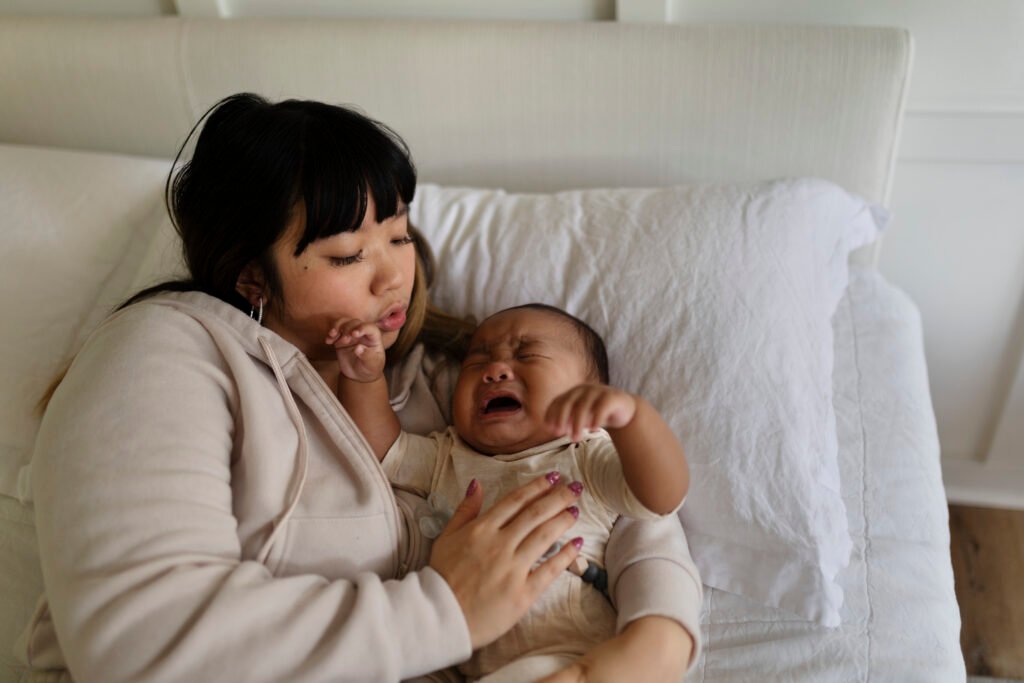
How to choose the right sleep training method? You might be wondering about the main differences between holistic and traditional sleep training. This guide will help you decide which method is the best for your baby.
Every parent wants the best for their child, and that includes ensuring they get a good night’s sleep. But what’s the best way to achieve that? Traditional and holistic sleep training methods are both popular, and parents are often torn between the two.
Traditional sleep training is a more structured approach that focuses on teaching babies to sleep through the night on their own. It often involves methods like controlled crying, where parents let their babies cry for increasing intervals until they learn to self-soothe.
Holistic sleep training, on the other hand, looks at sleep as a reflection of a baby’s overall well-being and aims to create a healthy sleep environment that encourages natural, healthy sleep habits. This can include a focus on nutrition, emotional well-being, and creating a calm, soothing environment for the baby.
But what are the main differences between holistic and traditional sleep training? How can you decide which method is the best for your baby? Keep reading, and we’ll answer all your questions.
Traditional sleep training is a more structured approach to sleep training. It is often seen as a more direct and quicker way to get a baby to sleep through the night. However, it has been criticized by some for being too harsh on babies.
The primary goal of traditional sleep training is to teach your baby to fall asleep on their own. It often involves methods like “controlled crying” or “cry it out,” where you let your baby cry for increasing intervals of time until they learn to self-soothe and fall asleep without your help.
Some popular traditional sleep training methods include:
Traditional sleep training is a very structured approach that is often seen as effective in helping babies learn to sleep through the night. However, it can be difficult for parents to listen to their babies cry, and it may not be suitable for all babies.
Holistic sleep training is a more gentle, natural approach to sleep training. It focuses on creating a healthy sleep environment and encouraging natural, healthy sleep habits in babies.
The primary goal of holistic sleep training is to create a healthy, calming, and soothing environment that helps your baby learn to fall asleep on their own and stay asleep through the night. It often involves methods like co-sleeping, baby-wearing, and breastfeeding.
Some popular holistic sleep training methods include:
Holistic sleep training is a gentler, more natural approach to sleep training that can be more suitable for some babies and parents. However, it can be more time-consuming and may not work for all babies.
Traditional sleep training and holistic sleep training are two popular approaches to getting babies to sleep through the night. Each approach has its own set of techniques, philosophies, and guidelines. Here are the main differences between the two approaches.
Traditional sleep training is focused on teaching your baby to sleep through the night by themselves. It often involves letting your baby cry for short periods of time, gradually increasing those periods until they can self-soothe and fall asleep on their own.
Holistic sleep training, on the other hand, is focused on creating a healthy sleep environment for your baby and encouraging natural, healthy sleep habits. It often involves methods like co-sleeping, baby-wearing, and breastfeeding.
Traditional sleep training often involves techniques like “controlled crying,” “Ferber method,” “extinction method,” and “gradual extinction method.” These techniques are all designed to help your baby learn to fall asleep on their own and stay asleep through the night.
Holistic sleep training often involves techniques like “no-tears approach,” “family bed approach,” and “pick-up, put-down method.” These techniques are all designed to provide comfort and support to your baby and help them learn to sleep through the night.
Traditional sleep training is often seen as a more direct and quicker way to get your baby to sleep through the night. It can take anywhere from a few days to a few weeks to see results, depending on the method you choose and your baby’s temperament.
Holistic sleep training is often seen as a more gentle, natural approach to sleep training. It can take longer to see results, and it may not work for all babies.
Traditional sleep training often involves parents being less involved in their baby’s sleep, as the goal is for the baby to learn to sleep through the night on their own.
Holistic sleep training often involves parents being more involved in their baby’s sleep, as the goal is to provide comfort and support to the baby to help them sleep better.
Traditional sleep training can be difficult for parents, as it often involves letting your baby cry for short periods of time. It can be hard to listen to your baby cry, and some parents find it emotionally challenging.
Holistic sleep training can be more comfortable for parents, as it often involves providing comfort and support to your baby when they cry. It can be a gentler, more natural approach that some parents find easier to handle.
With so many different sleep training methods out there, it can be overwhelming to figure out which one is the best for your baby. Here are a few tips to help you choose the right sleep training method for your baby.
Every baby is different, and what works for one baby may not work for another. Some babies may respond well to traditional sleep training, while others may need a more gentle, holistic approach.
Consider your baby’s temperament and what you think will work best for them.
Every parent has their own parenting style, and what works for one parent may not work for another. Consider your parenting style and what you think will work best for you and your baby.
Some sleep training methods may be more comfortable for you than others. Consider how you feel about letting your baby cry, and whether you think you can handle it.
Ultimately, the most important thing to consider when choosing a sleep training method is your baby’s needs. Think about what will be best for your baby and what will help them sleep through the night in a healthy, natural way.
Sleep training is a topic that sparks much debate among parents. It’s essential to choose the method that best suits your family’s needs and aligns with your parenting style.
Whether you opt for the more structured traditional sleep training or the gentle, natural holistic approach, the key is to be consistent and patient.
Remember that every child is unique, and what works for one may not work for another. Be open to trying different methods and adapt as needed to find the best solution for your baby and your family.
For more information, watch “Traditional Sleep Training vs. Holistic Sleep Training – What’s the difference?“:
The most common traditional sleep training methods include the Ferber method, the cry it out method, and the chair method. These methods typically involve allowing the baby to cry for increasing intervals of time until they learn to self-soothe and fall asleep on their own.
Holistic sleep training techniques focus on creating a calming sleep environment and may include practices such as co-sleeping, baby-wearing, and providing comfort to the baby whenever they cry.
Traditional sleep training is more structured and involves teaching the baby to sleep independently, while holistic sleep training focuses on creating a nurturing sleep environment and providing comfort to the baby.
The best method for your baby will depend on their individual needs and your parenting style. Consider consulting with a pediatrician or sleep consultant to determine the most appropriate approach for your family.
Yes, it is possible to combine both traditional and holistic sleep training techniques. Some parents may choose to use elements from both approaches to create a sleep training plan that works best for their baby.
While some babies may experience temporary distress during sleep training, studies have shown that there are no long-term negative effects on babies’ emotional development, attachment, or overall well-being.