
Why every sleeping bag chart says something different, and what to actually do about it*
It’s 11pm, and you’ve got three browser tabs open. One brand says your baby needs a 2.5 tog tonight. Another says 1.0. A third doesn’t mention tog at all, it just says “medium weight, for cooler nights.” Your baby’s room sits at 20 degrees, the app on your phone says one thing, the tag on the bag says another, and you are no closer to knowing what to actually put him in.
You haven’t done anything wrong. The charts genuinely don’t agree with each other. Here’s why, and here’s what to do instead.

Tog is a measure of thermal resistance, how well a fabric holds warmth against the body. It was developed in Manchester in 1946 for testing duvets, not baby sleepwear. The name comes from “togs,” old slang for clothes. A higher number means more insulation. A lower number means less.
There is a British Standard for testing it, BS 4745, and most reputable baby sleepwear brands use some version of that method. So the number on the tag isn’t made up. But it was built to rate a doona, not to tell you what to dress a 14-month-old in on a Tuesday night in July
This is the part that catches most parents out. A 2.5 tog isn’t a fixed temperature. It’s a range, and every brand sets that range slightly differently.
ErgoPouch lists 2.5 tog for room temperatures of 15 to 21 degrees. The Gro Company’s Grobag lists 2.5 tog for 16 to 20 degrees. Several US brands built their charts around the American Academy of Paediatrics’ recommended room temperature of 20 to 22 degrees, which sits at the warm end of both of those ranges. Three legitimate, well-tested products. Three different answers for the same number.
None of these brands are wrong. They’re just not talking to each other. There is no single body that requires baby sleepwear companies to test and label tog the same way. In the United States, it isn’t even a mandatory test at all, brands can label a tog rating using their own method, or skip it entirely and describe a bag as “lightweight” or “warm” instead.
It’s not only the tog charts. The underlying room temperature guidance shifts depending on which country you’re reading.
The Lullaby Trust in the UK recommends 16 to 20 degrees, and points to overheating as a genuine SIDS risk factor in a country where central heating and thick duvets are the norm. The American Academy of Paediatrics recommends a warmer 20 to 22 degrees, reflecting homes that lean heavily on climate control. Red Nose here in Australia deliberately doesn’t give you one fixed number. Their position is that there’s no evidence a specific room temperature prevents SIDS, and that the safer, more useful marker is whether your baby is dressed appropriately for the room they’re actually in, not too hot, not too cold, face and head uncovered.
That’s not Red Nose being vague. It’s Red Nose being honest about the science, and it’s also a good reflection of how varied Australian homes are. A Queenslander with no insulation and a fan in January is a completely different environment to a double-brick home in Melbourne in July. A UK-built chart, developed for houses with central heating and double glazing as standard, was never going to map cleanly onto that.
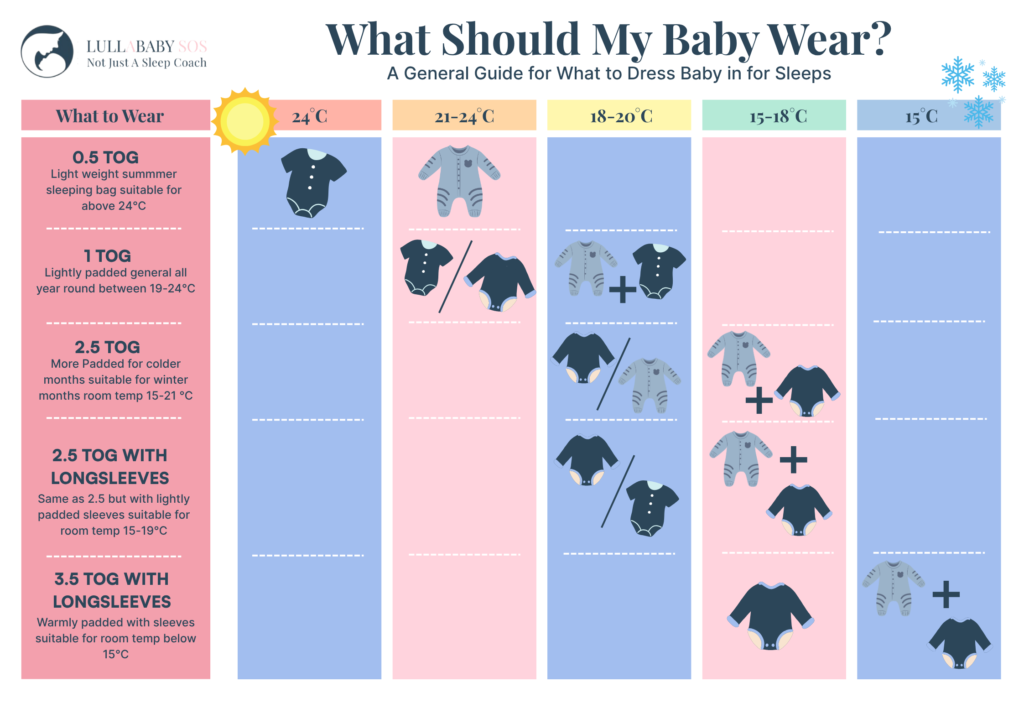
Use the tog chart as your starting point. It will get you into the right ballpark, and it’s a genuinely useful tool for that. Then watch your baby, because their body will tell you more than any chart can.
**Too warm** looks like a baby who moves around a lot. They spread out, arms and legs flung wide, seeking cooler air and cooler surfaces, sometimes with damp hair or a sweaty neck.
**Too cold** looks like a lot of movement too, but the shape is different. They curl in, knees drawn up, hands tucked under their body, often leaning into a corner or side of the cot.
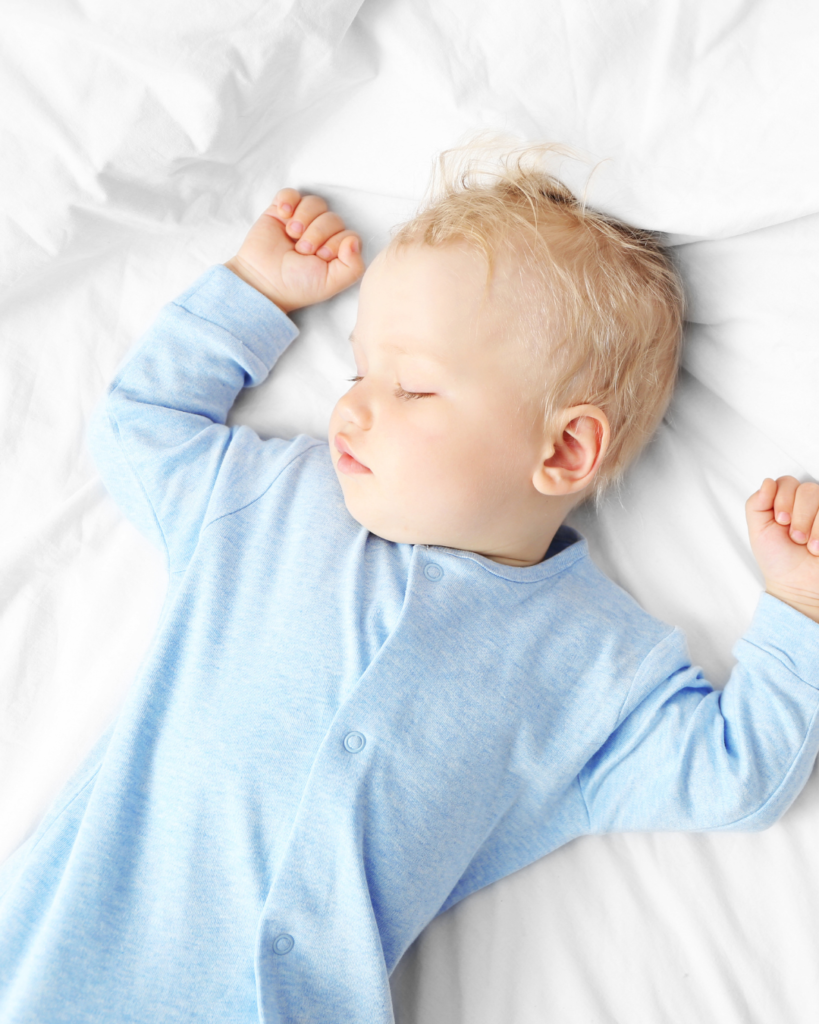
**Just right** looks like a baby who settles into a neutral position and doesn’t move around much at all.
If it’s a genuinely cold night, add a layer underneath the bag rather than jumping to a warmer tog. And ignore the old “dress them one layer warmer than you” rule. It assumes you and your partner run the same temperature at night, and in my experience, most couples don’t. Cue dad in nothing more than boxers under nothing more than a sheet, while mum is in full long pants and long-sleeve pyjamas, cocooned in the duvet. You can use your tog rating as a guide. But the best thing you can do is watch your baby. That’s not a cop-out answer. It’s the only one that actually accounts for your home, your climate, and your particular baby.
There’s no single correct tog number waiting to be discovered. There’s a chart that gets you close and a baby who tells you the rest. Most nights, that’s enough. If you’re still second-guessing it three brands and three charts later, that’s not a sign you’re missing something. It’s a sign the system itself was never going to give you a clean answer.
If sleep in general still feels like guesswork, not just tonight’s outfit but the bigger picture of routine and settling, that’s exactly what we work through together in Babies in Balance program. And if you want a closer look at how room environment fits into the wider sleep picture, have a read of our guide to setting up a sleep-safe nursery.
If you’d rather talk it through, you can book a consultation here and we’ll figure out what’s actually going on for your family, not just tonight’s tog number.